Pest Wildlife Animal Information

RACCOON: This common nuisance species is very intelligent, curious, and physically capable - strong, and are especially good climbers. Raccoons frequently break into houses and attics, in search of food and shelter. They'll also steal pet food, defecate inside your house, and make all sorts of trouble. Adults range from 10 lbs on up, with some reaching over 40lbs. They can live up to 12 years in the wild, though average life spans average closer to 5-6 years. Raccoons mate in the winter, around December, and the females give birth to an average of 3-5 young. Raccoons are omnivores, which means that they eat both meat and plant matter, and have a varied diet. They live in a variety of habitats, but the highest populations are actually in developed suburban or urban areas where food, water and shelter is plentiful.

HONEY BEES - HELP SAVE THE BEES. We remove and translocate live bees to our farm in Sparta, TN. We specialize in Africanized Killer Bee Removals. Honeybees are incredibly important social insects that live in highly organized colonies. Honeybees pollinate roughly one-third of the food we eat, including fruits, vegetables, nuts, and seeds. Without them, many crops would fail. To make one pound of honey, bees collectively fly about 55,000 miles and visit 2–5 million flowers. "If the bee disappeared off the surface of the Earth, man would only have four years left to live"
We do sell 100% Fresh Local Raw Honey (while supplies last). We quickly sell out early in the season, but plan to add more hives soon.
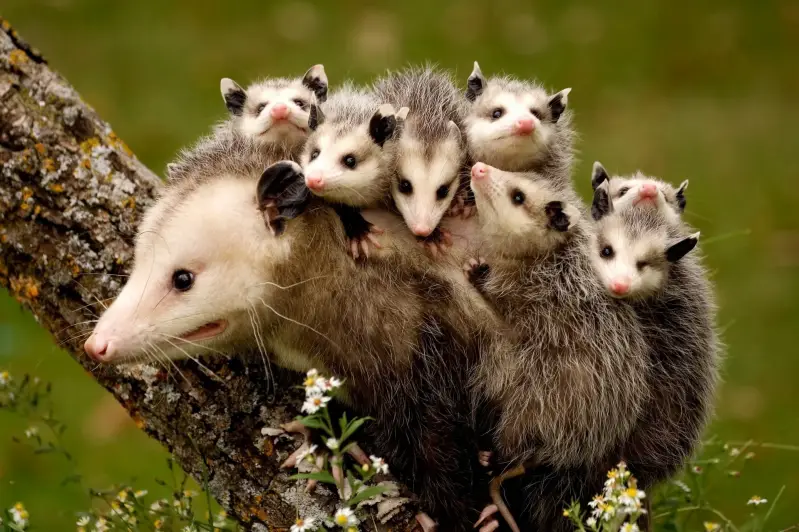
OPOSSUM: O possums are nomadic and opportunistic animals. They sometimes establish a home base, especially a female with young, and often live in human structures and mate in January. Adults average 10-14 lbs. Opossums rarely live more than two to three years. Opossums are omnivores, which means that they'll eat just about anything. They are nocturnal. They have the most teeth of any mammal (50), a prehensile tail, opposable thumbs, and they have incredible immune systems. Opossums rarely get rabies because their low body temperature which makes it difficult for the rabies virus to thrive and or survive. We allow a few to live on the farm because they eat poisonous snakes.

BATS:
A common nuisance (colonizing) species in the US. The females form large maternity colonies, often in buildings such as attics or barns. Young are born in June, and can fly by August. The average lifespan in the wild is estimated to be about 7 years. They hibernate in the winter. The Big Brown Bat is also common in the northern areas. It has a wingspan up to 13 inches, and can live up to 19 years in the wild. They mate in October, before winter hibernation, and after a delayed fertilization and a 60 day gestation, give birth to one or two baby bats in early June.

SQUIRREL:
Squirrels love to live in attics and crawl spaces. Adults average about one pound in weight. They can live for up to ten years (in captivity) but life expectancy in the wild is about 3 to 4 years. Squirrels give birth to two litters per year - one in late summer, and one in winter. The female gives birth to 3 or 4 young (after only 44 days from the conception). The young grow quickly, and are weaned in about ten weeks. Squirrels are most active in morning and evening. Squirrels eat mostly nuts and seeds. They live in a variety of habitats consisting of farm, forest and suburban city areas alike.

NINE BANDED ARMADILLO: Armaillos cause problems by digging. They are nocturnal animals, and they burrow under the ground to sleep during the day. They forage at night, and dig up worms and grubs. Adults average 12-16 pounds, and while they can live up to 15 years, many are victims of automobile deaths. Reproduction is interesting - they copulate missionary style, they mate in summer but delay fertilization until November, and in March, after a 120 day gestation, give birth to four identical quadruplets. Another interesting fact is that Armadillos can carry the human form of leprosy. Transmission of leprosy typically requires prolonged, direct contact with an infected animal's bodily fluids.

SNAKES: There are too many snake species in Tennessee to list here. The important thing to know is that most snakes are non-venomous, and not many them are aggressive, unless provoked. If you leave the snake alone, it will leave you alone. Snakes use their pineal gland, the "third eye", a crucial neuroendocrine organ that helps regulate seasonal behaviors (like reproduction and hibernation) by sensing light and temperature, producing hormones like melatonin to control circadian rhythms and annual cycles, its function is less directly photoreceptive than in other reptiles. Because Coach Whip Snakes eat Rattle Snakes, we allow her to go anywhere she pleases in the farm yard.
Create Your Own Website With Webador